Introduction:
In today’s rapidly changing world, parents and educators have a deeper understanding of how vital the early years of education truly are. At The Heritage, ranked among the schools in noida, these foundational years—from ages 3 to 10—are seen as the stage when the brain develops quickly, lifelong habits begin to form, core values take root, and a child’s curiosity shapes the basis of future learning.
When choosing a primary school, families often seek institutions that excel in supporting this crucial phase of growth. These years are not limited to learning basic academics; they focus on developing key skills, emotional strength, and positive attitudes that influence a child’s entire journey ahead.
This article delves into why early schooling is so impactful, how strong foundation years contribute to lifelong success, and the value of modern educational approaches. It also showcases how The Heritage School thoughtfully and holistically nurtures young learners for the world ahead.
About Us:
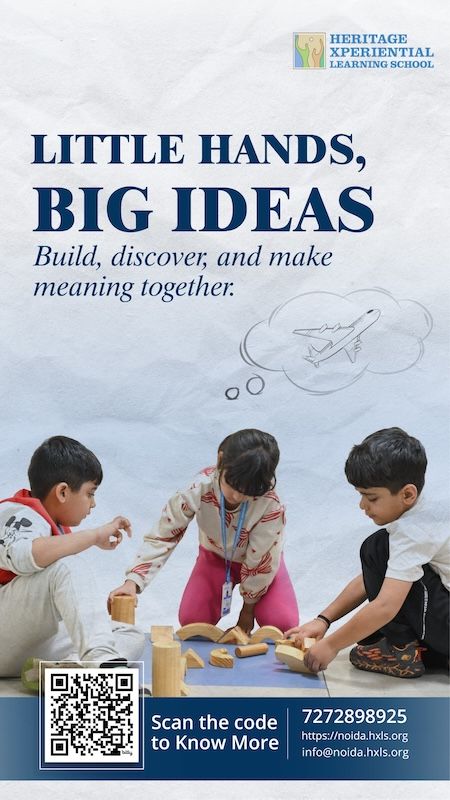
At The Heritage School, we understand that early years form the cornerstone of a child’s academic, emotional, and social journey. Our foundational program is designed to nurture young learners through play-based learning, sensory activities, storytelling, music, movement, and experiential exploration. Classrooms are warm, stimulating, and child-centric, empowering students to develop language skills, early numeracy, fine motor abilities, social behavior, and emotional expression. Our early years curriculum integrates fun-filled activities such as puppet shows, theme-based events, circle time, art corners, nature walks, sports for beginners, and foundational life-skills programs. These experiences build curiosity, independence, and confidence—qualities that shape future success. With trained educators and thoughtfully planned learning spaces, the school ensures every child’s growth is holistic and joyful. We are committed to giving young learners strong foundations that prepare them for academic excellence and meaningful lifelong learning.
1. Why the Foundational Years Matter More Than Most Parents Realize
When children step into a school for the first time, they are stepping into the world of structured learning, social interaction, and emotional independence. These initial experiences significantly determine how they will approach challenges and learning in the future.
1.1 The Brain’s Peak Development Period
Science shows that nearly 90% of brain growth occurs before the age of 8.
This includes development of:
-
Language and communication abilities
-
Memory and cognitive reasoning
-
Emotional regulation
-
Social behavior
-
Problem-solving patterns
Children are naturally wired to absorb information like sponges during this time. A school environment that stimulates their curiosity ensures their mental development aligns with their fullest potential.
1.2 The Start of Emotional and Social Frameworks
During the foundational years, children begin:
-
Understanding friendships
-
Practicing empathy
-
Managing emotions
-
Recognizing group dynamics
-
Building self-confidence
If a child learns to navigate emotions, share ideas, and resolve conflicts early, they carry those strengths into adolescence and adulthood.
1.3 The Roots of Academic Success
A strong academic base in the early years develops:
-
Reading fluency
-
Number sense
-
Pattern recognition
-
Early reasoning abilities
These skills become the pillars on which future learning in mathematics, science, language, and analytical subjects stand.
2. What Makes the Foundational Stage So Influential?
The early years shape the entire learning arc of a child. When a school ensures a well-balanced, stimulating environment, children naturally grow stronger academically, socially, emotionally, and creatively.
2.1 Children Develop a Lifelong Attitude Toward Learning
If early education is joyful, interactive, and meaningful, children grow up believing that learning is exciting—not stressful.
This mindset directly impacts:
-
Classroom performance
-
Willingness to explore new topics
-
Resilience during challenges
-
Curiosity across subjects
2.2 Early Experiences Shape Confidence and Self-Identity
A supportive learning environment assures children that their ideas matter. When young learners feel valued, their confidence grows.
Later in life, this translates into:
-
Strong leadership qualities
-
Effective communication
-
Assertive yet respectful behavior
-
Academic courage and independence
2.3 Early Learning Affects Future Behavioral Patterns
Children who experience positive reinforcement early develop:
-
Better discipline
-
Stronger focus
-
Improved coping skills
-
Respectful interaction habits
These behavioral structures stay with them throughout life.
3. How Schools Shape Strong Foundations Through Purposeful Teaching
Modern primary education is evolving with approaches that move beyond theory-led instruction. Schools catering to the expectations associated with the primary school emphasize holistic, child-centered teaching.
3.1 Play-Based and Experiential Learning
Hands-on learning encourages students to explore, question, create, and experiment.
Foundational education today includes:
-
Storytelling and interactive reading
-
Nature walks
-
Creative art
-
Sensory activities
-
Dramatic play
-
Music and rhythm exercises
These experiences make learning meaningful and unforgettable.
3.2 Multi-Sensory Teaching Methods
Young children learn best when multiple senses are involved.
Techniques include:
-
Visual aids (pictures, charts, flashcards)
-
Kinesthetic learning (movement-based games)
-
Auditory activities (songs, rhymes, spoken activities)
-
Tactile materials (clay, sand, building blocks)
This ensures deeper understanding, stronger memory retention, and active engagement.
3.3 Developing Values and Life Skills
Foundational education is not just academic—it’s character-building.
Schools teach children values like:
-
Respect
-
Responsibility
-
Kindness
-
Gratitude
-
Honesty
These values become the guiding compass for future relationships, choices, and personal integrity.
3.4 Encouraging Early Independence
Young children are taught essential life skills such as:
-
Organizing their belongings
-
Completing simple tasks
-
Making choices
-
Asking questions
-
Taking ownership
This prepares them for higher academic responsibilities and real-world problem-solving.
4. The Role of Creativity in Strengthening Foundations
Creativity is no longer an optional element—it is central to the learning process.
4.1 Enhancing Problem-Solving Skills
Creative activities help children:
-
Think differently
-
Visualize solutions
-
Approach challenges from various angles
This creative thinking is the basis of innovation in adulthood.
4.2 Boosting Emotional Well-Being
Art, music, stories, and imaginative play give children a safe outlet to express feelings they cannot yet verbalize.
4.3 Supporting Brain Development
Creative exploration encourages neural connections, improving:
-
Cognitive flexibility
-
Focus
-
Memory
-
Analytical skills
5. Physical Development: The Often Overlooked Foundation of Success
Strong foundational years also emphasize physical growth. Gross motor and fine motor skills develop rapidly during this time.
5.1 Building Motor Skills
Activities such as climbing, running, coloring, and crafting help children improve:
-
Balance
-
Coordination
-
Hand–eye coordination
-
Strength
These abilities directly affect academic tasks like writing, drawing, and reading.
5.2 Improving Academic Performance
Active students show better:
-
Concentration
-
Memory
-
Classroom engagement
Physical movement stimulates brain activity, making children more alert and ready to learn.
6. Emotional Intelligence: The Heart of Lifelong Success
EQ, not just IQ, is the strongest predictor of future success.
6.1 Recognizing and Managing Emotions
Children learn early to:
-
Identify their feelings
-
Understand triggers
-
Regulate reactions
EQ helps them navigate social environments effortlessly as adults.
6.2 Building Empathy
Understanding others’ feelings allows children to develop:
-
Compassion
-
Stronger friendships
-
Cooperative behavior
Empathy becomes essential in careers that demand teamwork and leadership.
7. How Parental Involvement Strengthens the Foundation
Parents play an equally important role in shaping children’s early learning outcomes.
7.1 Consistency Between Home and School
When parents reinforce school learning at home, children perform better academically and emotionally.
7.2 Encouraging a Learning Culture
Simple activities like reading bedtime stories, discussing new topics, or exploring outdoor environments build curiosity.
7.3 Providing Emotional Security
Children who feel supported and understood at home show stronger resilience and confidence.
8. Long-Term Benefits of Strong Foundational Years
Early schooling has a massive influence on:
8.1 Academic Excellence
Children develop:
-
Strong vocabulary
-
Logical reasoning
-
Analytical thinking
-
Mathematical foundation
These skills shape long-term academic success.
8.2 Social Growth
Students learn how to:
-
Communicate
-
Collaborate
-
Lead
-
Respect diversity
These skills create socially responsible, mature adults.
8.3 Emotional Stability
Emotionally stable children:
-
Make better choices
-
Have stronger self-esteem
-
Cope better with stress
-
Build healthier relationships
8.4 Career Success
Qualities like problem-solving, creativity, discipline, and empathy—developed early on—become assets in every professional field.
9. Why Parents Prioritize Strong Foundations While Choosing Schools
Parents reviewing the primary school understand that early learning is a long-term investment. These schools emphasize:
-
Safe and nurturing environments
-
World-class teaching practices
-
Balanced learning
-
Values and character-building
-
Technological readiness
-
Creativity and innovation
-
Strong academic pillars
This combination ensures that children step into the future prepared, confident, and capable.
10. The Heritage School’s Thoughtful Approach to Foundational Learning
The Heritage School integrates a deeply child-centered, experiential, and values-driven approach to foundational education.
By focusing on curiosity, expression, inquiry, discipline, and emotional development, the school ensures each child builds a foundation that lasts a lifetime.
Its environment fosters independent thinking, joyful learning, and character development—all essential for lifelong success.
Conclusion:
A child’s foundational years are the most influential period of their educational journey. They shape:
-
Knowledge
-
Personality
-
Social behavior
-
Emotional intelligence
-
Creativity
-
Future academic performance
When children receive the right guidance during these early years, they grow into confident learners, empathetic individuals, and future-ready citizens.
Investing in strong foundational years is the greatest gift parents and educators can give—and its impact lasts a lifetime.
FAQs:
1. Why are foundational years so crucial?
These early years shape a child’s cognitive, emotional, and social development.
2. What skills are built during early learning?
Communication, basic numeracy, emotional regulation, curiosity, and social interaction.
3. How does a strong foundation support future academics?
It builds confidence and learning habits that make later concepts easier to understand.
4. Why is play-based learning effective at this stage?
Play helps children grasp ideas naturally while improving creativity and motor skills.
5. What role do parents play in foundational development?
Parents can reinforce learning through reading, conversation, and daily routines.
6. Do early learning experiences impact adulthood?
Yes, children with strong foundations often become more confident, adaptable, and successful adults.